
When picture-perfect tropical island destinations come to mind, crystal-clear turquoise waters and thriving marine life are usually what we imagine. But off the coast of Semporna on Pom Pom Island in Malaysia, this underwater paradise faces severe threats from historical destructive fishing practices. That is where the Tropical Research and Conservation Centre (TRACC) steps in. Operating as a dedicated non-profit marine conservation organisation, Managing Director Robin Philippo and his team are turning damaged reefs back into thriving marine sanctuaries through scientific research, coral restoration, turtle protection, and local community engagement. Holding Green Fins Certified Gold status, TRACC proves that high-impact conservation and diving operations go hand in hand. Last year we spoke with Robin Philippo about how they integrate Green Fins practices on a remote island and what it takes to safeguard Malaysia’s precious marine environment.
Why did you decide to become a Green Fins Member?
Green Fins and TRACC have a very similar thought process towards sustainability and protection of our oceans. It was a logical and straight forward decision for us to be part of the mission Green Fins is bringing to the international diving community.
Can you share your experience going through the Green Fins certification process?
The experience for the certification process was straight to the point with clear goals trying to achieve. I was pleased that we came out straight into the top 10 worldwide as we have been priding ourselves for sustainability within the organisation despite all the challenges it brings on the island. Having the Gold status is just a verification of the work we have put in over the past decade.
Since becoming a Green Fins Member, what actions or initiatives have you implemented to promote environmental conservation — and which are you most proud of?
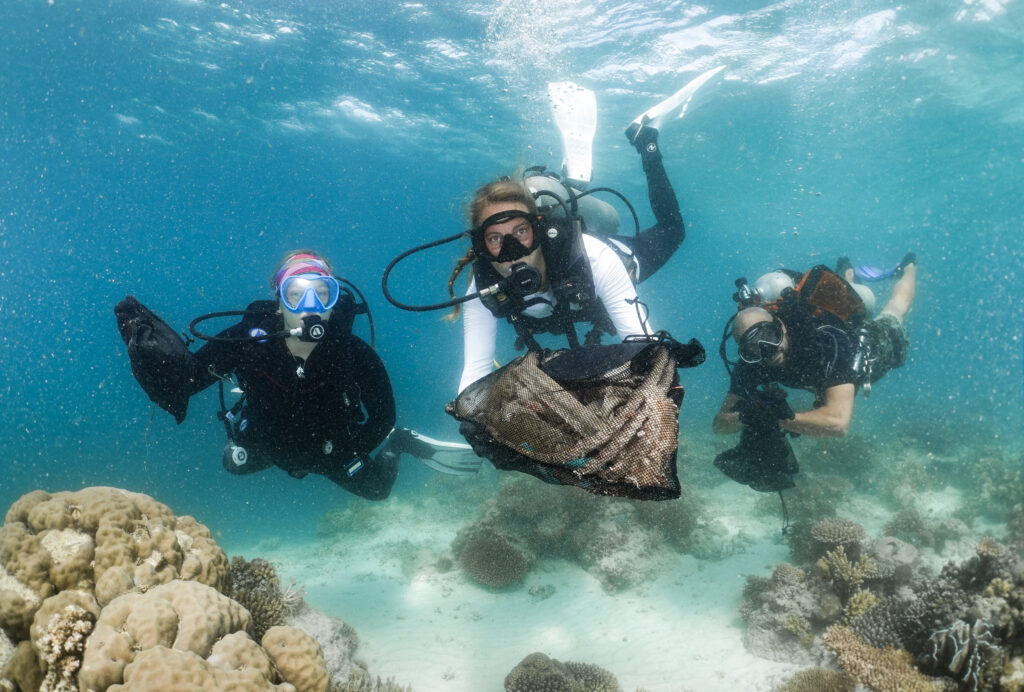
TRACC has always put the conservation mindset as the top priority towards our volunteers and staff. Where we conduct daily beach cleans, underwater clean ups, participate in turtle and coral conservation and research. All of these activities bring forward a sense of pride, I highly encourage others to look after the ocean as much as we can, as operators we are all depending on this. One of the big parts that we are currently implementing is the verification of others when our volunteers go dive elsewhere. Looking out for the Green Fins certificate where possible, ensuring that sustainability is something that is practiced wherever they go!
What challenges have you faced while putting sustainable practices into action, and how did you overcome them?
Being on such a remote island attached to one of the poorest regions of Malaysia, the ability to source sustainable items proved rather difficult. However with the help of Green Fins advice we have now been able to find a supplier for sustainable soap alternatives which has been fantastic! The final straw is the elimination of two stroke engines, however financially this will remain something on our to do list for a while!
How has your team responded to the sustainability changes introduced through Green Fins?
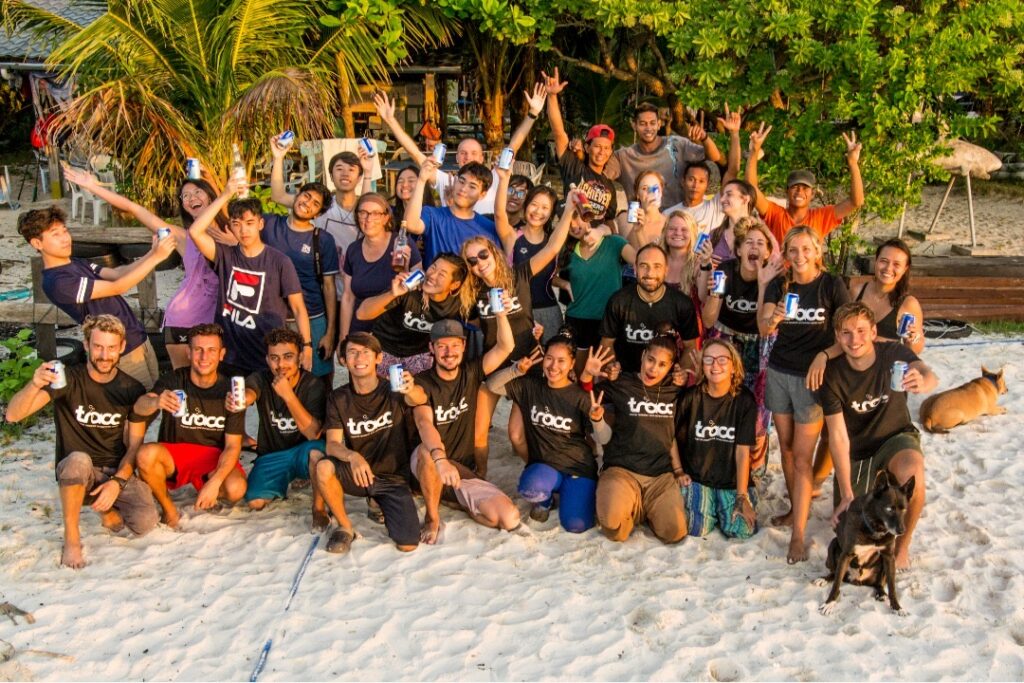
The team responded with a sense of pride, to see the organisation make it with the Gold status, showing the work that has been done is now recognised and appreciated not just internally.
How have your sustainable efforts helped you grow your business/attract new customers?
Looking after our oceans in all different forms and ways has always brought us volunteers. Sustainability is a key component for the dive industry for today, tomorrow and the future. Without our focus on this we might not have the same oceans to dive in, our operations run as we know them. Sustainability is something that people are looking for and are being vocal about. The demand for sustainability is there and will be increasing in the years to come. It’s everyone’s responsibility and I believe that the operators who put this at the forefront will eventually be the ones that gain the most traction.
What advice would you give to other operators who are thinking of joining Green Fins?
Do it! There is nothing to lose, having someone to come in and educate and explain about the prcoesses that are harmful for the ocean and its inhabitants is a blessing. We are not all experts in everything, having a Green Fins assessor come in and educate and explain how you are able to future proof your organisation is nothing short of fantastic. Take the opportunity and take the leap.
Looking ahead, what new sustainability initiatives or projects are you planning to introduce?
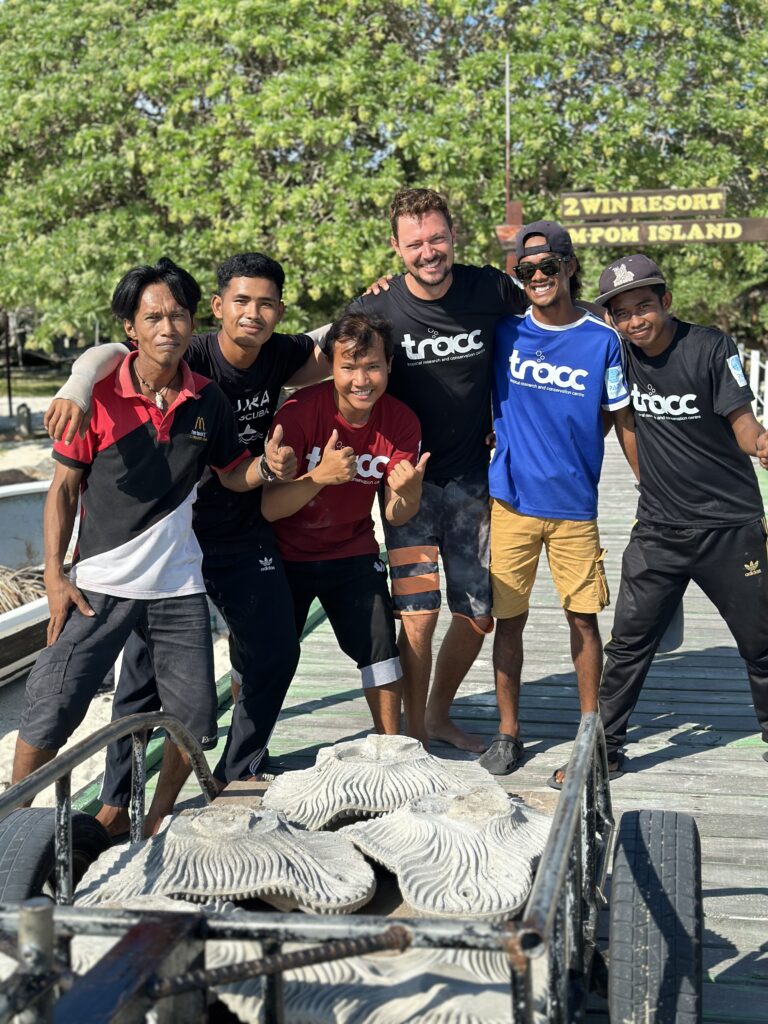
We’re fortunate to be part of the Coral Research & Development Acceleration Platform (CORDAP), initiated by the G20 nations. Over the next two years, TRACC will lead two major studies aligned with our conservation mission.
First, alongside Queensland University of Technology (QUT) and King Abdullah University of Science and Technology (KAUST), we’re field-testing natural bioadhesives to stabilize loose rubble on damaged reefs around Pom Pom. Part of this work means ditching unsustainable materials like plastic netting, chemical epoxies, and superglues in favor of fully biodegradable bioadhesive cable ties—eliminating single-use plastics from reef restoration altogether.
Second, we’re launching a community-driven initiative with the local stateless Bajau community on Kulapuan Island. We’ll be training locals up to Rescue Diver and Divemaster levels to build, deploy, maintain, and survey 50 custom artificial reef structures. This provides sustainable, alternative livelihoods in an area where reef recovery is struggling, helping protect future fish stocks so the community can preserve their traditional fishing heritage without relying on destructive practices. We couldn’t be more thrilled to get to work on these over the next two years!
TRACC is showing no signs of slowing down as they embark on groundbreaking CORDAP-funded research—from developing plastic-free bioadhesives for coral restoration to empowering the local stateless Bajau community with diving skills and alternative livelihoods. Their journey underscores that sustainability is a continuous commitment, built on everyday actions, community pride, and a shared vision for our oceans. For dive operators hesitant to start their own eco-friendly transition, Robin’s advice is simple: take the leap and invite guidance that will future-proof your operation.
Ready to take your dive business to the next level and protect our oceans for future generations? Learn more about becoming part of the Green Fins community at greenfins.net/join
All images courtesy of TRACC.