
In the currents of Komodo, safety and sustainability required a human solution, not just a spreadsheet.
Have you ever pulled up to a bucket-list dive site, looked around at the flotilla of other boats, and felt your hopes sink? When a site is this crowded, you know your dive is likely to be filled with the sight of bubbles and fins rather than the spectacular species you travelled thousands of miles to see.
In Komodo National Park, overcrowding isn’t just a nuisance; it is a hazard. The park is famous for its ripping, unpredictable currents. You cannot simply dive when you want to; you dive when the ocean allows. When the tide turns and the window opens, every boat needs their divers in the water at the exact same moment.
This pressure creates a dangerous bottleneck that threatens both the environment and the divers themselves. To address the crisis, a dedicated working committee was formed by three members of the dive association Gahawisri and three members of the Dive Operators Collaboration Komodo (D.O.C.K.): Melissa Jonsson, Markus Reinhardt, and Sofia Tedestam.
Established in 2007, D.O.C.K. has spent nearly 20 years building a membership of 14 operators and fostering trust within the community. We talked to the D.O.C.K. representatives about the committee ’s efforts to find solutions to overcrowding.
“At sites like Batu Bolong, where we dive in layers along steep slopes, overcrowding was becoming a safety issue,” the committee explains. “Divers at the top were being engulfed by bubbles from groups below, and the sheer volume of people led to the improper use of reef hooks, damaging the coral. We were seeing guest disappointment at even our most iconic sites. It was worsening every season, and we knew we had to act before the next high pressure period.“
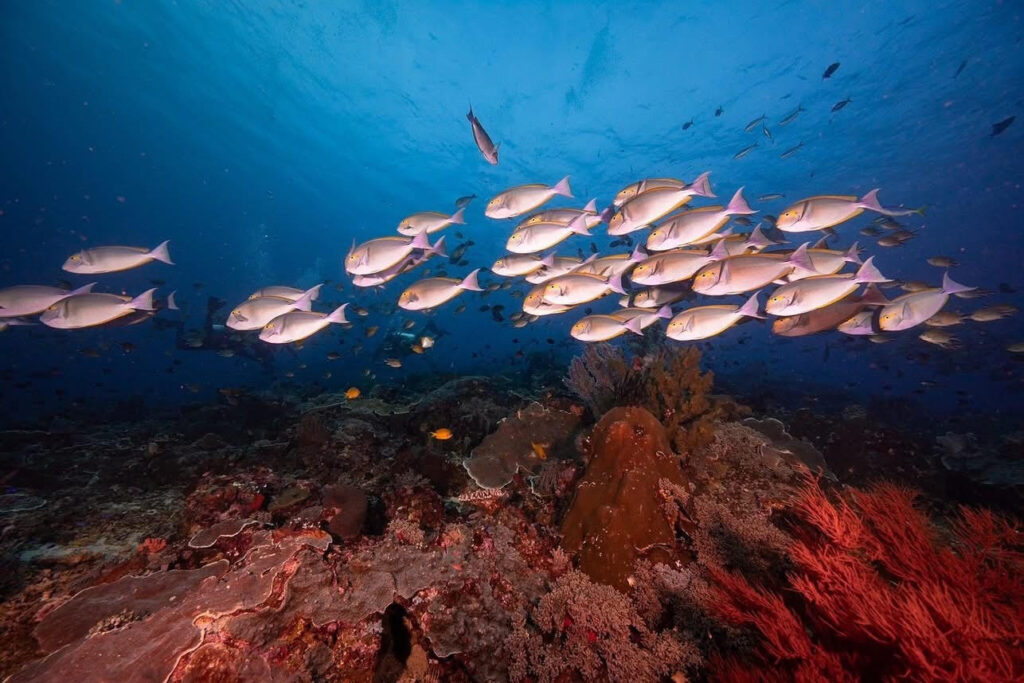
Photo by Azul Komodo
A Community, Not A Policeman
In many parts of the world, the solution to this would be a “top-down” government effort with strict permits, rigid time slots, and fines. In Komodo, the authorities did try to implement a booking system based on boat capacity, but it struggled to account for the reality of the water.
“The prediction of tides and currents is not that easy in Komodo,” the committee noted. “The old system could actually impact safety if a center had a specific time slot during strong currents. Unlike the government, who is rarely underwater, the dive centers are able to make real-time adaptive changes.“
The solution needed to be “water-up” and the working committee led the charge. But they recognised they couldn’t solve this in a silo. The committee reached out to other associations, including the national liveaboard association, Jangkar, to form a unified front.
The Pivot: Listening to the Ocean
With the right people at the table, the path to a solution became a living experiment. The committee didn’t try to force the failing slot-based system to work; instead, they got curious. They distributed surveys, held open conversations with other operators, and made themselves available to chat with anyone who had a grievance.
This feedback loop revealed that a rigid rule enforced from a desk would never work. Instead, they needed a shared habit agreed upon by the people actually steering the boats – a system as fluid as the ocean itself.
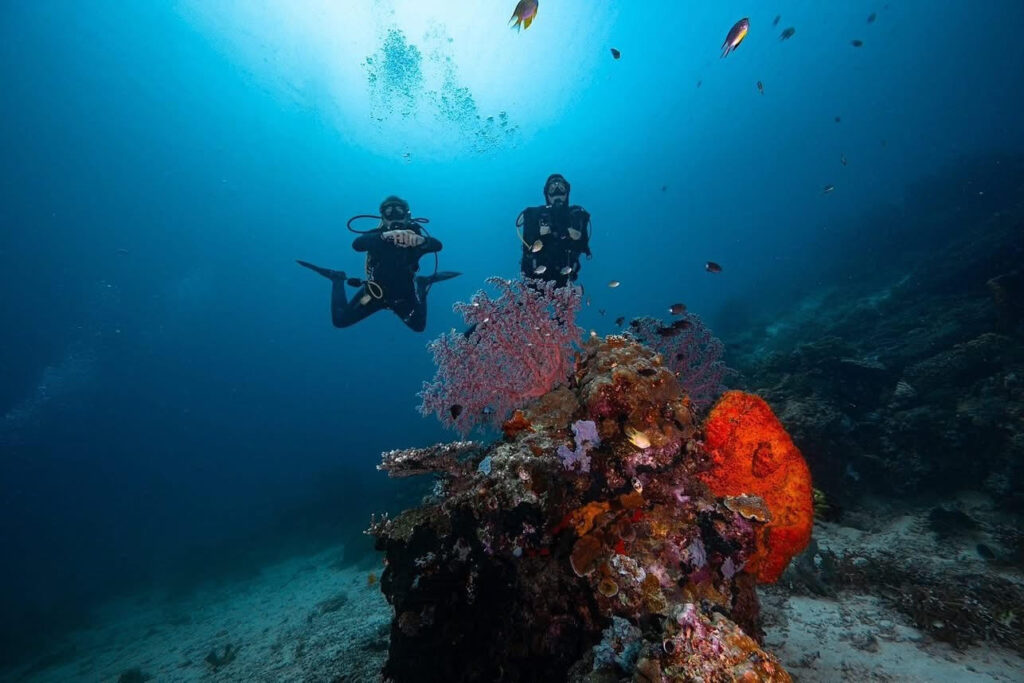
Photo by Azul Komodo
The “20-Minute Rule” in Action
The resulting system is elegant in its simplicity: a 20-minute stagger between boat entries. But the real magic happens on the radio. Instead of vying to get in the water first, captains and guides now coordinate in real-time.
“It took time to train all guides and captains, but we saw improvement week to week,” the committee says. “The key was getting away from that selfish approach. With time, the guides realised it is better to wait 20 minutes and have a better experience for their guests.“
While day boats follow the 20-minute stagger, the collaboration goes further. Liveaboards now use a dedicated WhatsApp group to coordinate their schedules, intentionally diving outside of peak day-boat hours to further spread out the pressure on these fragile sites.
It’s not just the schedule that needed to be managed. With such iconic conditions, each dive site in Komodo is like its own character and divers come with specific sites and experiences in mind. To avoid guest disappointment if a site wasn’t available, all operators were encouraged not to promise any specific dive sites, but to have clear communication about the variety of sites from early on; both with online bookings and walk-in guests.
The rollout included a trial period at three high-traffic sites, allowing for mistakes and adjustments without penalty. Supported by materials in English and Bahasa, the new habit was socialised rather than policed.
Ripples of Change
The results are already surfacing. By prioritising communication over competition, the operators have reclaimed the “exclusive” feel of Komodo’s most precious sites. If too many boats are waiting, some now simply decide to move on to a different site – a level of self-regulation that was previously unthinkable.
The 20-minute committee sent out another survey, specifically for dive guides, captains and dive shop managers. The majority of respondents reported an improvement in all areas; safety, environment and enhanced dive experience for their guests.
The initiative was heavily influenced by the Green Fins ethos; all three D.O.C.K. members of the working committee are Green Fins Certified Members, and that commitment to environmental stewardship underpinned the entire strategy.
“Feedback from guests has been overwhelmingly positive,” the committee shared. “The official rule also makes it easier for our dive guides on the boat to explain the wait to the guests. Their understanding is much better.“
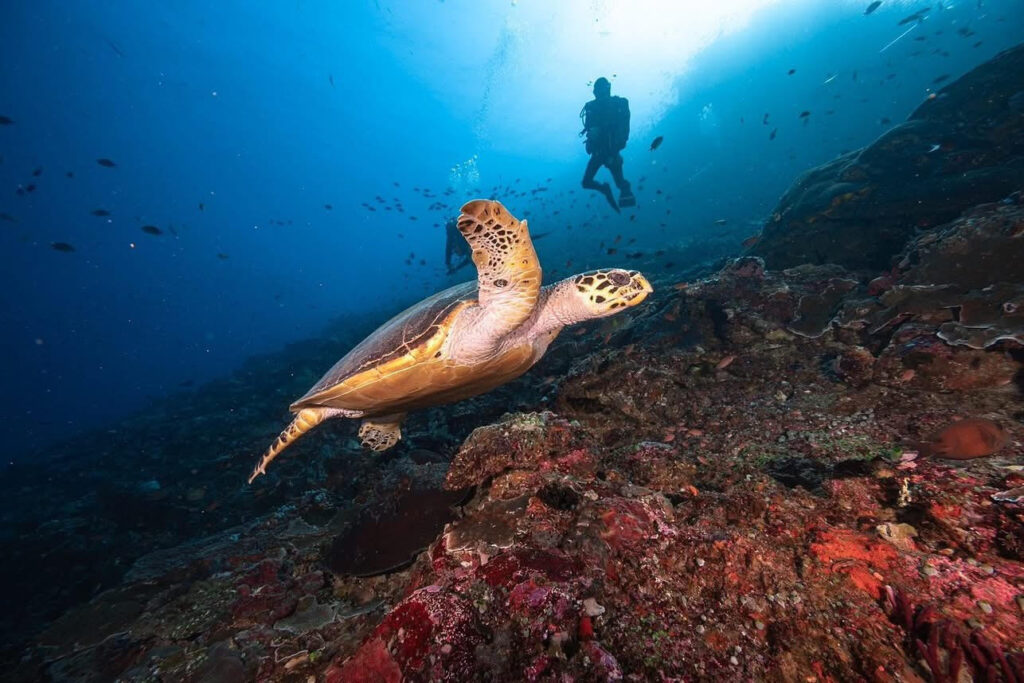
Photo by Azul Komodo
The Future of Komodo
What started as a community trial is now catching the eye of regulators. The National Park authorities have been supportive of this self-regulation and are considering making the 20-minute rule an official law, potentially expanding it to other sites.
This initiative is more than just a scheduling fix; it’s a testament to the fact that environmental stewardship is the best business strategy. By reducing the physical pressure on fragile dive sites, this community is quite literally protecting its own future. The real impact lies in the shift from competition to collective care – empowering boat captains and dive guides to act as the primary stewards of their own waters.
Following their success, the committee is excited for the future. “It shows the power of collaboration and communication can have a positive impact on our nature. We are hopeful to have a bright future ahead for the Komodo National Park and its amazing marine life!”
Since a recent Labuan Bajo dive operator meeting, another idea is brewing. Having had such success collaborating on carrying capacity, the associations and authorities are turning their gaze towards improving mooring buoys, and thereby removing anchor damage to the fragile reefs.
The 20-minute rule, and the momentum it’s built, ensures that Komodo remains a premier destination where marine life thrives and the guest experience is defined by awe rather than crowds. It proves that when we put the reef first, everyone wins: the smallest coral polyp, the local dive industry, and the entire community that calls this world-class destination home.

Perhaps need to recheck again how this idea was initiative. I am the chairman of labuan bajo marine tourism association (gahawisri) and im not trying to get any credit, just need to stated the fact. As what i read this blog seems to drive it as green fins effort. And i think green fins also need to verified the member if they are really conducting the activity according the green fins prog to protect the environment. Check on the news about anchor was dragged and destroy the coral in sebayur.
Hi Budi, thanks for your comment and congratulations on Gahawisri’s efforts for the 20-min rule.
Our intent was to showcase a community-led effort that protects the environment that others can learn from, and that based on direct feedback from the members involved, the ethos of Green Fins influenced the attitude of the 3 DOCK committee members. We do not to take any credit for the effort the whole committee (and wider industry) has taken to drive this great initiative, but want to celebrate its success, sharing it as an example to others.
We also know it is sometimes hard to uphold rigorous environmental protocols without fail and try to support all members to uphold the highest standards at all times. Should there be lapses, we work with local authorities and the member to ensure lessons are learnt and they have sufficient knowledge to prevent its recurrence. We have taken action regarding the anchoring incident you mentioned, and we trust that the local community and authorities will build constructive ways forward.