
Sustainability in the dive industry is evolving. What was once driven by individual efforts, clean-ups, pledges, and internal policies is now guided by structured, growing global frameworks that bring consistency across the sector.
Green Fins has played a key role in that shift, offering a practical approach to improving environmental performance across marine tourism. The next step is understanding how these standards are applied in practice, particularly in complex, remote, and continuously operating environments.
Liveaboards are one of the clearest examples of this. Operating for days or weeks at sea, often far from infrastructure, sustainability is not a single initiative. It is built into systems, crew behaviour, and guest experience over the course of each trip. The Green Fins Code of Conduct provides a strong foundation, outlining expectations around waste, pollution, marine life protection, and education. The real work for operators is applying those standards consistently, day to day.
Explorer Ventures Liveaboard Diving Fleet® offers a clear example of how this transition from framework to practice can be applied at scale.
From Dive Green to global partnership
Explorer Ventures did not begin with Green Fins certification. It began with internal accountability. In 2008, the fleet introduced its Dive Green® environmental policy to reduce its environmental footprint. Over time, the framework evolved through real-world operations and changing expectations.
“We’ve always approached our operations with sustainability in mind,” says Clay McCardell, President. “Green Fins allowed us to formalize those practices and apply them more consistently across the fleet. On a liveaboard, it’s really the accumulation of small decisions that makes the difference.”
To align with a global standard, Explorer Ventures became the first liveaboard company to form a symbiotic partnership with The Reef-World Foundation in 2018. Reef-World is a UK-based charity that manages the Green Fins programme globally. This strengthened the Dive Green program while aligning it more closely with Green Fins.
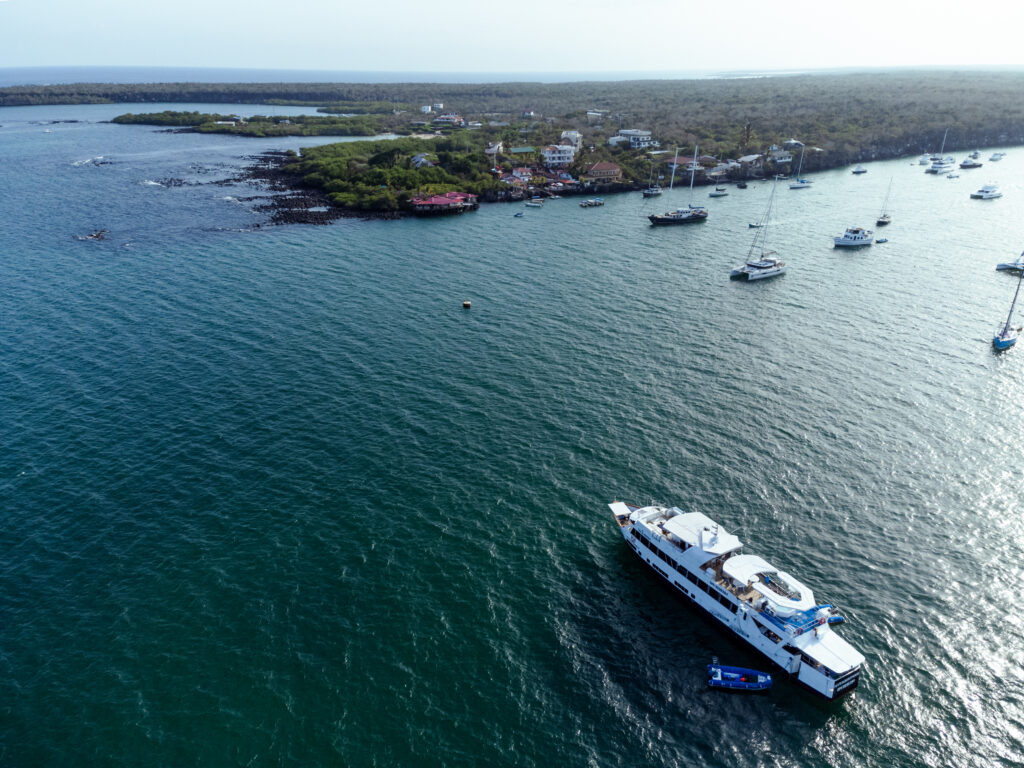
Today, four fleet vessels are active Green Fins members: Caribbean Explorer II (Saba & St Kitts), Turks & Caicos Explorer II (Turks & Caicos), Humboldt Explorer (Galápagos), and Tiburon Explorer (Galápagos), with practices applied consistently across operations.
Alongside what happens onboard, a significant part of this work sits with senior crew and management. Sustainability is not only implemented, but actively shaped, reviewed, and communicated at that level. This includes identifying operational gaps, adapting solutions to liveaboard and local realities, and sharing those learnings more broadly. Through platforms like the Green Fins Hub, there is an ongoing effort to contribute practical insights, support peer operators, and help bring more liveaboards into alignment with the framework.
It is a less visible part of the work, but an important one. Progress does not come from individual vessels alone, but from operators sharing what works and raising the standard together.
What sustainability looks like onboard
On a liveaboard, sustainability is operational. It shows up in the systems running behind the scenes and in how each dive is conducted. Green Fins provides the framework, but consistency is what drives impact. Within Explorer Ventures Fleet, this is reflected in daily practices that, while small on their own, add up over time.
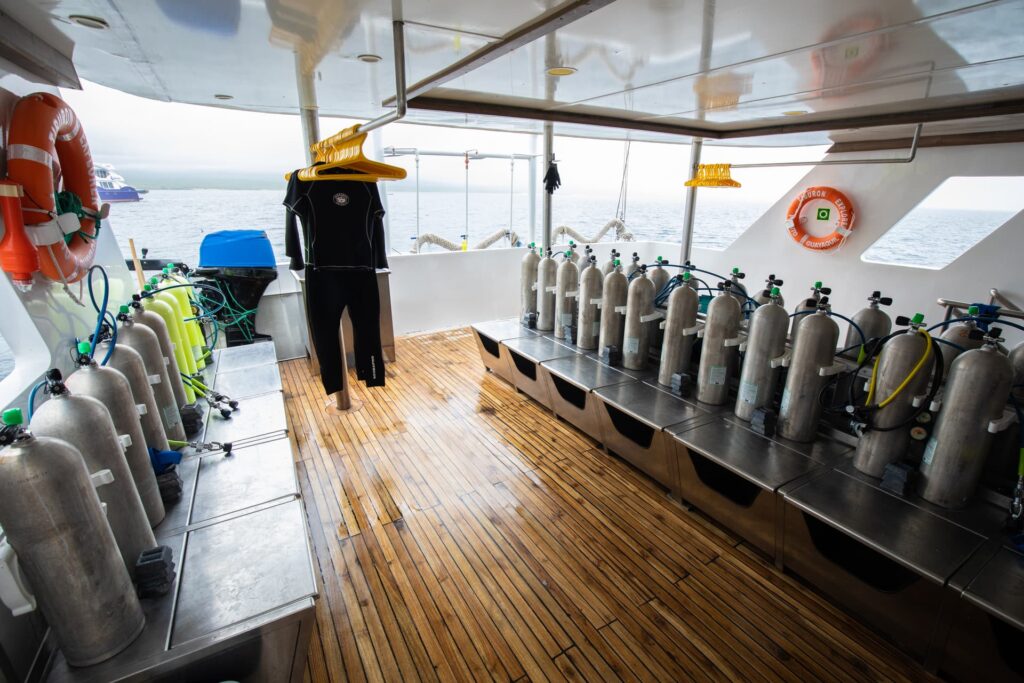
Onboard retail has shifted toward more environmentally responsible products, including items made from recycled materials. Cleaning practices prioritize products that reduce environmental impact. Waste is managed throughout each trip, with materials like aluminum, glass, and batteries separated and retained for proper handling in port.
These actions align with Green Fins guidance around waste reduction and pollution prevention, while also showing how standards are adapted in real conditions. None of these changes is individually transformative. Together, they represent how sustainability is applied in practice.
Crew, guests, and the reality of multi-day diving
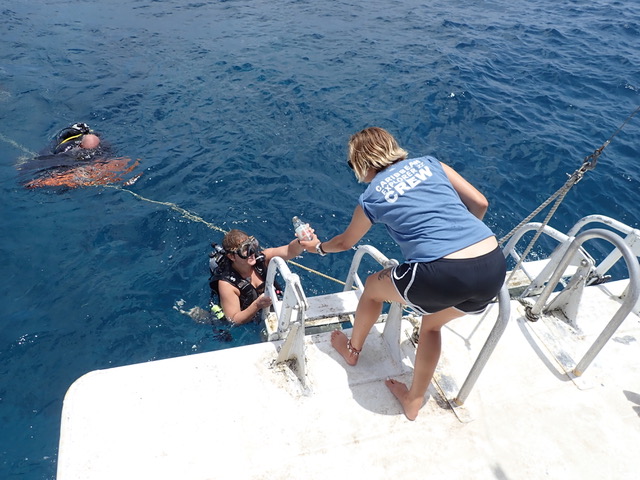
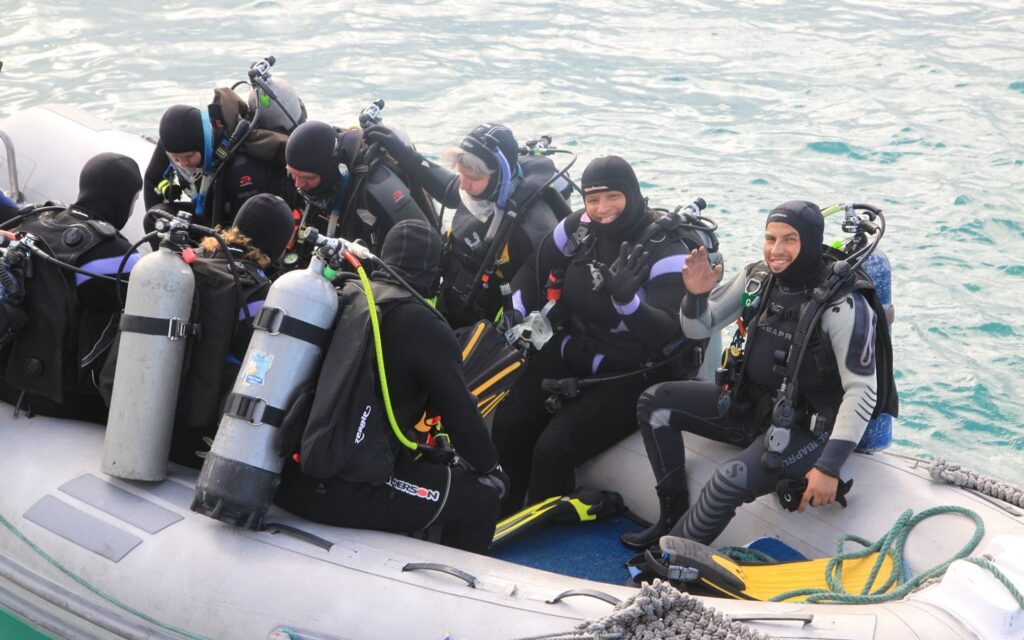
Time is one of the defining aspects of liveaboards. Guests are onboard for multiple days, sometimes up to 10, which creates both opportunity and complexity. Unlike day trips, sustainability is not delivered through a single briefing. It is reinforced over time.
Explorer Ventures integrates environmental messaging throughout the guest experience, from pre-trip preparation to dive briefings and in-water guidance.
“Our guests are often very experienced divers,” says Amber Martin, Assistant Operations Manager. “What shifts over the week is awareness. People start to dial things in, how they position themselves, how they move, how close they get to the wildlife without realizing it.”
This reflects one of Green Fins’ key strengths. It encourages behaviour change through education, repetition, and role modelling. In practice, this often means guiding rather than enforcing, which is generally more effective over time.
The goal is not just compliance, but awareness.
Operating where infrastructure does not exist
Many liveaboards operate in regions where infrastructure is limited or inconsistent. Green Fins provides a consistent standard, applying it in the field requires flexibility.
Waste systems vary by port. Recycling may not be available. Sustainable provisioning options are not always accessible. Water is produced onboard, adding another layer of responsibility.
In these conditions, sustainability is not about ideal systems. It is about applying best practices within real constraints and continuing to find workable solutions. In some cases, this means adapting systems. In others, it means helping build them locally.
This is where Green Fins is particularly valuable. It offers a stable framework that can be applied across different environments while maintaining a consistent level of responsibility.
Case study: PADI Eco Centers in the Galápagos Islands
This approach is especially visible in the Galápagos, where Humboldt Explorer and Tiburon Explorer have been recognized as PADI Eco Centers.
Operating in one of the most tightly regulated marine environments in the world, these vessels work within strict environmental expectations at sites such as Darwin and Wolf. In this context, sustainability is not optional. It is built into how operations are run, monitored, and evaluated. What makes this relevant beyond the Galápagos is not the designation itself, but how it is applied day to day.
Several practical themes stand out:
- Standards are integrated into operations, not added on. Environmental protocols are built into dive planning, vessel management, and guest experience from the start.
- Education is continuous. Rather than relying on a single briefing, expectations are reinforced throughout the trip, both onboard and in the water.
- Crew play a central role. Well-trained teams translate standards into real behaviour, guide divers, and maintain consistency across changing conditions.
- Conservation is part of the operation. Activities such as marine monitoring and data sharing are incorporated where possible, even within a commercial setting.
These approaches are not specific to one location. They can be adapted across different liveaboard operations, regardless of region. In this way, Green Fins moves beyond guidance. It becomes part of how operations are structured, maintained, and improved over time.
Extending beyond the vessel
Sustainability does not stop onboard. Explorer Ventures also contributes to conservation efforts beyond daily operations, in line with Green Fins principles.
In regions such as Saba and Turks and Caicos, the fleet reports observations to local organizations and supports ongoing research. Vessels also host scientists and assist with data collection. These contributions help build a broader understanding of marine ecosystems while reinforcing the role operators can play beyond tourism.
From framework to practice
The strength of Green Fins lies in turning environmental responsibility into clear, actionable standards. On liveaboards, those standards become operational. They are built into daily systems, crew behaviour, and decision-making. This is where sustainability becomes practical and visible. Not in policy, but in how consistently it is applied. For an industry working across diverse and often challenging environments, that consistency defines real impact.
As more operators apply Green Fins in practice, there is a clear opportunity to strengthen how these standards function across different models, particularly within the liveaboard sector.
Explorer Ventures sets a leading example of what this looks like in practice. Across the fleet, Green Fins principles are not treated as guidelines, but as an integrated part of how operations are run. From vessel systems to crew training and guest experience, these standards are applied consistently across regions and over time. As the first liveaboard company to form a symbiotic partnership with The Reef-World Foundation, Explorer Ventures has played a direct role in advancing how Green Fins is applied within liveaboard operations. This includes adapting standards to real-world conditions, identifying operational gaps, and contributing practical insights that support broader industry adoption.
This level of application moves beyond participation. It reflects a model that other liveaboard operators can build from.
In that sense, sustainability is not static. It is built through daily application, continuous refinement, and a clear commitment to raising the standard across the liveaboard industry.
For divers looking to experience these practices firsthand, Explorer Ventures Fleet vessels offer a chance to see how sustainability and liveaboard diving can work together in real time.